แสดงบทความที่มีป้ายกำกับ English Article แสดงบทความทั้งหมด

วันพฤหัสบดีที่ 28 กุมภาพันธ์ พ.ศ. 2556

[Article] 'Inao' from Java's Tale to a famous epic of Thailand by King Rama II.


[Article] 'Inao' from Java's Tale to a famous epic of Thailand writen by King Rama II.

by S. Robson / P. Changchit
Editro by
Roytavan
Photo Cr. - retardo58


Introduce of 'Inao' Thai's Tale...

Within Southeast Asia a certain amount of borrowing of literary themes has taken place, but not many examples have been studied in detail. A recognized case of such borrowing is the 'Panji' theme, which originated in Java, was popular for a time in the Malay-speaking world, and from there was transmitted to Thailand in a new guise, namely the tale of 'Inao'.

 It is a reasonable assumption that during the process of borrowing certain daptations will have occurred. This certainly applies to the somewhat fluid material of the Panji theme, where ample scope seems to have existed for the exercise of creativity on the part of its new authors and audiences. It is the nature of such adaptations that forms an interesting subject for investigation. On the one hand, one would expect the new environment to exert a clear cultural influence, but on the other, the nature of the mediums of expression may also be a factor to consider.

This paper will select just one scene from the Thai tale of ...'Inao'... and look at the ways in which it has been depicted in a range of mediums, from songs and poems to plays and paintings, from the popular to the classic. It will then attempt to indicate the significance of this scène for a Thai audience, at the same time noting what seems to be a specifically Thai contribution, in relation to what was borrowed from earlier models.


There is a song which is well known to most Thais, with the title of 'Bussaba Sieng Thien'. The verb sieng (low tone) means literally 'to take a chance', 'to guess at', and here it refers to trying to test what the future holds, by the use of a candle, thien. The idea of getting one's fortune told is very familiar to Thais, and there exist many methods of doing this.

'Bussaba Sieng Thien', is very romantic, and anyone can feel its sweetly plaintive appeal. Bussaba is betrothed to Inao, but does not know whether he will be true to her, while Inao does not know if Bussaba is able to love him at all, in view of what he has done. Furthermore, because of their circumstances, they are unable to meet.

A translation of the song is offered below. By way of introduction, however, it should be explained that the setting is thought to be a dark cave. In this cave there stands an image of Lord Buddha. Bussaba lights a candle and pays homage to the holy statue, in the hope that Lord Buddha will grant her prayer, namely that Inao should love her and her alone. At the same time, it is the candle which will give a sign as to whether her wish will be granted or not. She wants it to burn strongly and brightly, showing that his love for her will be true.


'Inao' written by King Rama II of Thailand...


The two characters mentioned in the song, 'Inao' and 'Bussaba', are so wellknown to Thais as to be proverbial lovers. Most people will be aware that their story is told in a very long and much admired poem written by King Rama II (ruled 1809-24), under the title Inao. This literary version is closely linked with the classical theatre, and it is probably the latter, rather than the printed text, which over the years has been instrumental in making the story (at least certain episodes of it) familiar to a wider public.

Although Inao is the work of a famous Thai king, Thais realize that the story has been borrowed, and that the action is set in another country, namely Java, and that the characters are therefore also Javanese. In fact, 'Inao' is a common jocular name for Indonesia, so close is the identification.

In order to find out more about the identity of these two characters, and the circumstances they find themselves in, one should go back to the Inao of King Rama II. A very brief summary of the opening part follows.


'Inao' (Bussaba Consults the Candle, Scene) Synopsis...
 
Inao is a son of the king of Kurepan by his first (highest-ranking) wife. He is also known as Raden Montri. Bussaba (pronounced Butsaba) is a daughter of the king of Daha by his principal wife. On her birth, the king of Kurepan sent betrothal gifts on behalf of his son, so the two cousins would be married in due time.

When Inao was aged 15, his grandmother in the kingdom of Manya passed away. He was delegated by the kings of Kurepan and Daha to represent them at the cremation. In Manya he met the daughter of the king, Jintara(wati), and immediately feil in love with her. Following the ceremonies, he did not wish to return home, but was ordered to do so by his father. So before leaving he sent a love-letter to Jintara. The king of Kurepan decided to expedite Inao's marriage to Bussaba in order to avoid any more problems.


Inao, however, was unwilling to concur, and took leave to go hunting. Having left the palace, he and his followers changed their names and adopted disguises. During this time he won two captive princesses. Then they headed for Manya, where the king (aware of his identity) received him well. There he took the opportunity to enter Jintara's bedroom and make her his wife. She in turn was sympathetic to the two captive princesses - and in this way Inao got three wives.

Inao was then ordered by his father to come home for his wedding to Bussaba, but he sent a message back that he was unwilling. The king of Daha was disappointed, and Bussaba feit she had been put to shame. So she would be married off to anyone who proposed. The king of Joraka, a very ugly man, heard this and proposed, so the king of Daha was forced to accept.

Meanwhile the king of Kamang Kuning also wanted her for his son, and was willing to fight for her. Hence the king of Daha was obliged to ask his relatives for aid, and in this way Inao was ordered to head for Daha. In the ensuing fight the attackers were driven off, and Inao killed the king of Kamang Kuning. In the palace of Daha he caught sight of Bussaba, and immediately regretted his former actions.


Joraka arrived too late to help defend Daha. Inao was now forced to try to find a way of preventing the marriage of Joraka and Bussaba, the king of Daha was sympathetic to his plight, but had already given his word.

It was at this point that the king of Daha, his wives and followers went out to the mountain Wilismara to make offerings and worship the image there. Inao joined the party, and the Madewi (king's second wife) suggested to Bussaba that she go before the image and find out about her fate using lighted candles. There were to be three of these candles, one for herself, the one on the left for Joraka, and the one on the right for Inao.

In order to get a picture of what happened, and how it has been perceived in the past, we are lucky enough to have a visual depiction in the form of a mural in a temple...


'Bussaba Sieng Thien',by Fong Naam (ฟองน้ำ)


วันพุธที่ 7 กันยายน พ.ศ. 2554

[Article] Pin Pia : The miraculous music instrumentfrom heaven of Lanna Kingdom.


Pin Pia : The miraculous music instrument from heaven of Lanna Kingdom.
Roytavan : Writer

This song that you heared on time is the music instrument from 'Pin Pia' sung by KamLa Tanyothorn music artist of Lanna (Chiangmai Thailand)

While Listening to the unique, soothing music of northern Thailand, one might wonder, "Am I really in Thailand?" The rhythm, the harmony, the combination of soft string, wind and percussion instruments of the Lanna Kingdom of old continue on today in a traditional form of music that perfectly matches the gentle nature of northern Thailand.

In order to fully appreciate this music, it is important to be a bit familiar with the various instruments used to convey this very special feeling. It is also helpful to know something about the background of both the instruments and the way in which they're blended to produce such peculiarly northern resonance.


Over hundreds years ago, when the sounds of the Pin Pia played in the land of Lanna Thai kingdom, the beautiful rhythm of it was always heard through out the villages. Especially at nights, Not only did it have a very gentle voice, but also was resonant. It seemed like the rhythm of music from the heavens. There was no need for any musical instruments to play with it, nor a singer to attact the audiences.But it always made them felt imbued with happiness.

Pin Pia is a flinging music instrument. The most miraculous or amazing element is the method of the playing. The player himself must not wear his shirt and put the casket of it on his chest. This will help his muscles to control the voice of the rhythm and makes the sounds more beautifully.

That is why it made the Pin Pia became a high class musical instrument of the Lanna Thai kingdom. At the present, it is quite rare to find a good musician to play it. Except a few senior players.


The Legend of Pin Pia :
The string instruments are the Pin Pia, the Zueng and the Zalor. The Pin Pia is said to have been introduced to Lanna from northern China. It has either two or four strings which are anchored to the instrument neck to regulate sound. The body is made of half a gourd or half a coconut shell and the open part of this is held against the player's chest allowing him to control musical tone. Music from the this instrument is called "Music from the Heart."

The Zueng is related to the Chinese Moon Lute, It is a four-stringed instrument with two large strings and two small strings for sound variation. It is a single piece of carved hardwood with a horn or bone plectrum. The player holds the instrument against his chest with his left hand, while the right hand plucks the strings. There are nine frets to control and alter tonal quality.

The Zalor is a relatively crude instrument when compared to the Zeung or Pin Pia, but it has its own unique quality. It is made of slightly more than a half a gourd, the open surface covered with a slat of wood. The zalor has two wire strings and tautness is regulated by pegs equipped with animal hair. This instrument is usually played together with the Zeung in instrumental folk songs

Note : The Pin Pia has 2-4 strings with 50 cms.wooden bar long. Its casket is made of coconut shell.


Rhythm of Lanna : Music Instrument Download


Peang Pin-Pia(เพลงพิณเปี๊ยะ) / 'Pin-Pia (พิณเปี๊ยะ)' Instrument.


วันเสาร์ที่ 3 กันยายน พ.ศ. 2554

[Article] 'Wat' or 'Thai Temple', The symbolic of Buddhist faith.


[Article] 'Wat' or 'Thai Temple', The symbolic of Buddhist faith.

One of the oldest enduring Eastern religions, Buddhism was founded in India during the sixth century BCE by Siddhartha Gautama, the historical Buddha. Although specific beliefs and practices vary, Buddhism centers around the idea that earthly suffering can be relieved by attaining Enlightenment, the cessation of the eternal cycle of death and rebirth in which all sentient beings are mired. In this section of the guide we'll direct you to Web sites with information on the history of Buddhism and explanations of fundamental concepts such as karma, the three jewels, the four noble truths, the eightfold path, and nirvana.

Strictly speaking 'Wat' or 'Thai Temple' is a Buddhist sacred precinct with monks' quarters, the temple proper, an edifice housing a large image of Buddha, and a structure for lessons. A Buddhist site without a minimum of three resident monks cannot correctly be described as a wat, although the term is frequently used more loosely, even for ruins of ancient temples. (As a transitive or intransitive verb, wat means to measure, to take measurements; compare templum, from which temple derives, having the same root as template.)

Buddhism in Thailand is largely of the Theravada school. Nearly 95% of Thailand's population is Buddhist of the Theravada school, though Buddhism in this country has become integrated with folk beliefs as well as Chinese religions from the large Thai-Chinese population.[1] Buddhist temples in Thailand are characterized by tall golden stupas, and the Buddhist architecture of Thailand is similar to that in other Southeast Asian countries, particularly Cambodia and Laos, with which Thailand shares cultural and historical heritage.


Thai Temple (Wat : Thai - วัด)

This article on Thai temple art and architecture discusses Buddhist temples in Thailand. A typical Thai Wat, which is loosely translated as monastery or temple, (from the Pāḷi vāṭa, meaning an enclosure) has an enclosing wall that divides it from the secular world.

'Wat' architecture...

The architecture of a Wat has seen many changes in Thailand in the course of history. Although there are many differences in lay-out and style, they all adhere to the same principals. A Thai temple, with few exceptions, consists of two parts: The Phuttha-wat and the Sangha-wat.

Phutthawat (Thai: เขตพุทธาวาส)

The Phutthawat (Thai: เขตพุทธาวาส) is the area which is dedicated to Buddha. It generally contains several buildings:

Chedi (Thai: พระเจดีย์) – also known as a stupa it is mostly seen in the form of a bell-shaped tower, often accessible and covered with gold leaf, containing a relic chamber.

Prang (Thai: พระปรางค์) – the Thai version of Khmer temple towers, mostly seen in temples from the Sukhothai and the Ayutthaya period.

Ubosot or Bot (Thai: พระอุโบสถ or Thai: โบสถ์) – the Ordination Hall and most sacred area of a Wat. Eight Sema stones (Bai Sema, Thai: ใบเสมา) mark the consecrated area.

Wihan (Thai: พระวิหาร) – in Thai temples this designates a shrine hall that contains the principal Buddha images; it is the assembly hall where monks and believers congregate.

Mondop (Thai: พระมณฑป) - A Mondop is a specific square or cruciform based building or shrine,sometimes with a spired roof within a Thai Buddhist temple or temple complex. It is a ceremonial structural form that can be applied to several different kinds of buildings. It can house relics, sacred scriptures or act as a shrine.Unlike the mandapa of Khmer or Indian temple, which are part of a larger structure, the Thai mondop is a free -standing unit.

Ho trai (Thai: หอไตร) – the Temple Library or Scriptures Depository houses the sacred Tipiṭaka scriptures. Sometimes they are built in the form of a Mondop (Thai: พระมณฑป), a cubical-shaped building where the pyramidal roof is carried by columns.

Sala (Thai: ศาลา) – an open pavilion providing shade and a place to rest.
Sala kan prian (Thai: ศาลาการเปรียญ) – a large, open hall where lay people can hear sermons or receive religious education. It literally means "Hall, in which monks study for their Prian exam" and is used for saying afternoon prayers.

Ho rakang (Thai: หอระฆัง) – the bell tower is used for waking the monks and to announce the morning and evening ceremonies.

Phra rabieng (Thai: พระระเบียง) – a peristyle is sometimes built around the sacred inner area as a cloister.

Additional buildings can also be found inside the Phuttawat area, depending on local needs, such as a crematorium or a school.

The buildings are often adorned with elements such as chofahs. In temples of the Rattanakosin era, such as Wat Pho and Wat Ratchabopit, the ubosot can be contained within a (low) inner wall called a Kamphaeng Kaew (Thai: กำแพงแก้ว), which translated to 'Crystal Wall'.

Sanghawat (Thai: เขตสังฆาวาส)

The Sanghawat (Thai: เขตสังฆาวาส) contains the living quarters of the monks. It also lies within the wall surrounding the whole temple compound. The sanghawat area can have the following buildings:

Kuti (Thai: กุฎี or กุฎิ kut) – originally a small structure, built on stilts, designed to house a monk, with its proper size defined in the Sanghathisep, Rule 6, to be 12 by 7 Keub (4.013 by 2.343 meters). Modern kutis take on the shape of an apartment building with small rooms for the monks.

The sanghawat can also contain the 'Ho rakang' (bell tower) and even the 'Sala Kan Prian' (sermon hall).

It will house most of the functional buildings such as a kitchen building where food can be prepared by lay people, and sanitary buildings.

วันพฤหัสบดีที่ 1 กันยายน พ.ศ. 2554

[Japanese Tale] The romantic myth of 'Orihime' and 'Hikoboshi'.


[Japanese Tale] The romantic myth of 'Orihime' and 'Hikoboshi'.

There was once a beautiful Princess of Heaven named 'Orihime', daughter of the Emperor of Heaven (or the Jade Emperor in the Chinese tradition). Orihime loved to weave all day at her loom, creating the cloth of stars worn by her honoured father. For many years, weaving this wondrous fabric was all that her heart desired.

One day, a peasant boy named 'Hikoboshi' passed by, leading an ox from star to star. When Orihime and Hikoboshi's eyes met, loved suddenly filled both their hearts and from that moment on, Orihime cared no more for her weaving.

When the Emperor of Heaven learned of this, he came to her and said that he would send for the ox boy, that they might wed, and Orihime and Hikoboshi were soon married. However, so great was their love that they could not stand to be apart for even one hour. Hikoboshi neglected his duties and his ox roamed among the stars. Orihime continued to neglected her weaving.

Before long, this became so became intolerable to the emperor that he passed a harsh sentence on the two. Orihime and Hikoboshi, he said, must live separately on opposite shores of the great River of Heaven. However, the emperor knew of young love and he did have some compassion: he decreed that Hikoboshi would be permitted to cross the River of Heaven one night a year, on the seventh day of the seventh month, to be with his beloved bride...

วันจันทร์ที่ 29 สิงหาคม พ.ศ. 2554

[Article] Chachoengsao: Train Trip Allows For Plenty of Sightseeing Options.


[Article] Chachoengsao: Train Trip Allows For Plenty of Sightseeing Options. Written by Nida Tunsuttiwong
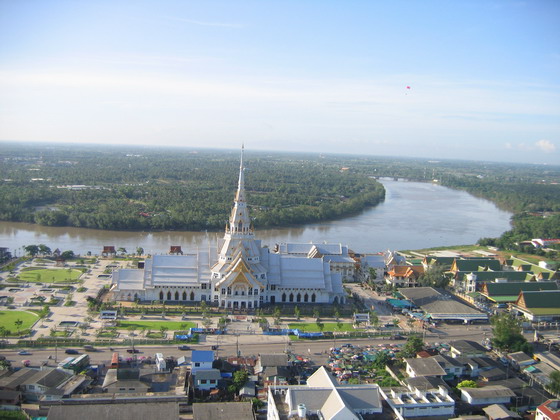
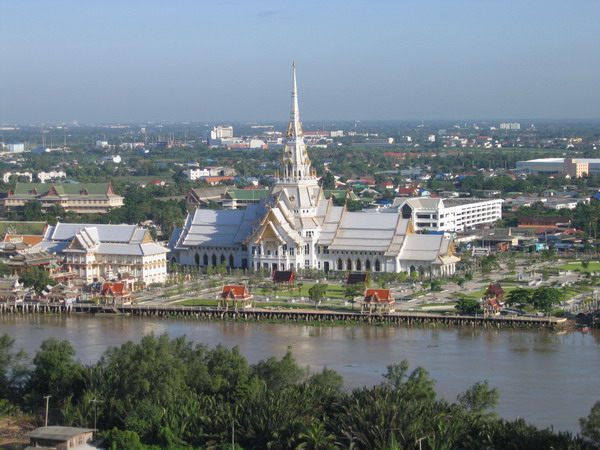
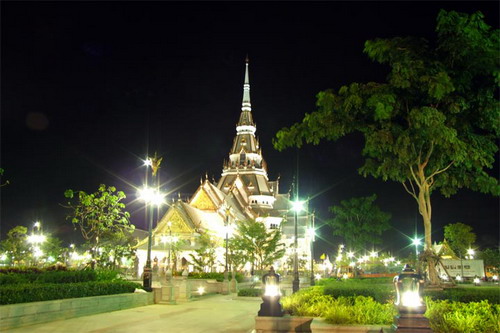
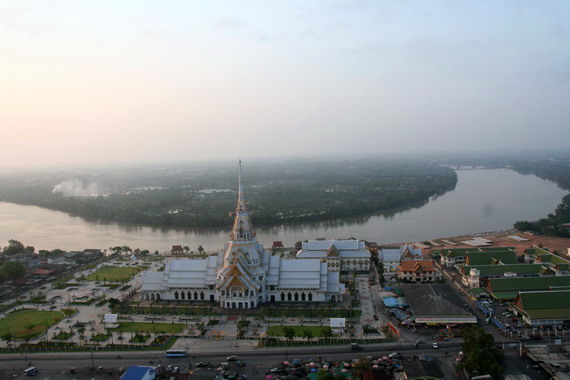
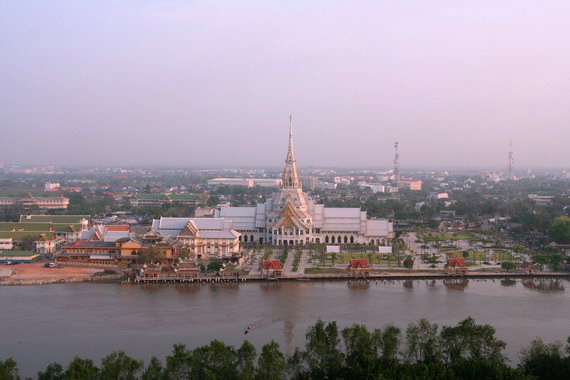
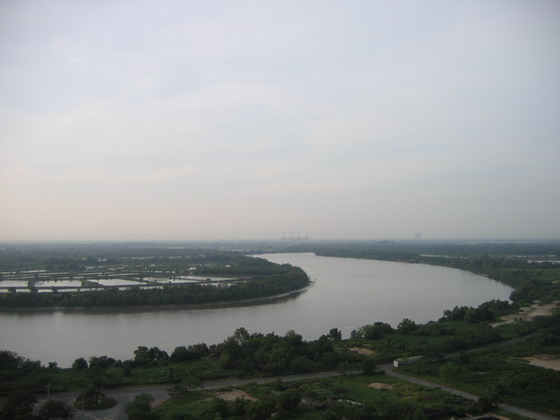
The province of Chachoengsao is probably best known for its famous Bangpakong River and the temple of Wat Luang Por Sothorn, which is home to one of the kingdom’s most revered Buddha images.

While it’s conveniently located just 100 kilometers to the east of Bangkok, until recently the province has seldom been thought of as a potential tourism destination. Recognizing the potential Chachoengsao offers domestic and international tourists, the State Railway of Thailand (SRT) recently organized a familiarization trip to the province by train, calling at several tourist attractions located within a short distance of Chachoengsao Junction.


A Relaxing Pace Our eastbound train departed Bangkok’s main Hualamphong station right on schedule (10.10 am). We gradually left behind the capital's high-rise buildings, passing through the Bangkok suburbs before eventually reaching open countryside, where you can see locals enjoying a rather more relaxed, rural way of life.

On arrival at Chachoengsao Junction, you’ll find several forms of local transport, including songthaew (a pick up with bench seats) and motorcycle taxis, which you can use to get around the municipality to visit its various attractions.

We were fortunate to learn that 'Chitra Konuntakiet', a renowned author, who writes about Chinese culture, was leading our group, so she was able to impart a good deal of knowledge on matters relating to Chinese and Thai culture.

Wat Sothorn Wat Sothorn is best known for its principal Buddha statue, known as Phra Phuthasothon (or Luang Por Sothorn [read more).

After paying our respects to the statue, we headed for a pier located just behind the temple’s new ubosot (Ordination Hall) and hopped aboard a converted, antique rice barge that then made its way up river towards Ban Mai market.

Since there are lots of nipa palm and cork trees growing alongside one side of the river, you'll notice lots of foliage, whereas there is more human-based activity taking place on the other side of the river since it's lined with residences and government buildings.


Before long, we arrived to the Ban Pa Nu restaurant 'Ban Mai market for some lunch.

Meaning ‘new house’ or ‘new village’ in Thai, Ban Mai market was established during King Rama V’s reign (1868-1910). The market, which features numerous vendors selling all kinds of different savory Thai dishes and desserts, is located between rows of one- and two-story wooden homes, which remain in excellent condition.

On Reflection Once we had finished our enjoyable meal, we walked a short distance from the market to an old Chinese temple run by the Mahayana Sect called Wat Chin Pracha Samosorn (or Wat Leng Hok Yi). With about 75 joss sticks clasped between my palms, I paid homage to statues of the Lord Buddha, as well as statues of Chinese gods, which can be found at 31 different locations within the temple compound.

Talented Individuals Next stop was the World Sand Sculpture, which showcases large sculptures produced by a significant number of local and international artists.

Some of the exhibits resemble characters from Thai literature, while others mark historic events or well known sites in other countries, such as the Great Wall of China and the Sydney Opera House, among others. It was enjoyable to watch some incredibly talented local artists at work as they produced ornate sculptures made from sand.

Our next call was a Thai dessert shop called 'Rin', which has been producing mouthwatering desserts for over 30 years. Two of the most popular dishes sold here are Foi Thong (a Thai dessert made with egg yolk, sugar and flour) and Khanom Chan (a layered, sugar-based Thai dessert).

As the afternoon turned into evening, we ventured a short distance away from the town to visit an interesting pottery called Koomwimarndin, where you can either check out its huge range of products, or even try your hand at crafting some items from clay (read more).

Near the pottery's workshop area is a small coffee shop if you're in need of refreshment, or you can venture slightly further afield by visiting the mango orchards nearby.


Before setting off on our return journey to Bangkok, we dropped in at the temple of 'Wat Samanratanaram', which is home to Thailand's largest reclining Ganesha, which measures 16 meters in height and 22 m in length.

The base includes images of Ganesha in 32 different poses, each thought to respond to a different kind of wish.

On arrival at Lad Krabang station, we switched over to the Airport Link service that runs between Suvarnabhumi International Airport and Bangkok's downtown area since it provides a faster service than the regular train service.

The express train, which can reach speeds of up to 160 kilometers per hour, costs 100 baht (US$3.19) for a return ticket, but it should be noted that this service currently operates solely between the airport and Phaya Thai station.

The local city link service that operates at somewhat slower speeds on the same track, however, stops at Ban Tap Chang, Hua Mark, Ramkhamhaeng, Makkasan and Phaya Thai, and the current promotional fare for this service is just 15 baht.

For further information, call the SRT hotline on Tel: 1690, or visit the official SRT website at http://www.railway.co.th/


Photo Credit 'Wat Sothon' by Khon Kung Rom Bin (คนกรุงร่มบิน)


วันพฤหัสบดีที่ 25 สิงหาคม พ.ศ. 2554

[Article] 'Inao' from Java's Tale to a famous epic of Thailand by King Rama II.


[Article] 'Inao' from Java's Tale to a famous epic of Thailand writen by King Rama II.
by S. Robson / P. Changchit
Editro by
Roytavan
Photo Cr. - retardo58

Introduce of 'Inao' Thai's Tale...
Within Southeast Asia a certain amount of borrowing of literary themes has taken place, but not many examples have been studied in detail. A recognized case of such borrowing is the 'Panji' theme, which originated in Java, was popular for a time in the Malay-speaking world, and from there was transmitted to Thailand in a new guise, namely the tale of 'Inao'.

It is a reasonable assumption that during the process of borrowing certain daptations will have occurred. This certainly applies to the somewhat fluid material of the Panji theme, where ample scope seems to have existed for the exercise of creativity on the part of its new authors and audiences. It is the nature of such adaptations that forms an interesting subject for investigation. On the one hand, one would expect the new environment to exert a clear cultural influence, but on the other, the nature of the mediums of expression may also be a factor to consider.

This paper will select just one scene from the Thai tale of ...'Inao'... and look at the ways in which it has been depicted in a range of mediums, from songs and poems to plays and paintings, from the popular to the classic. It will then attempt to indicate the significance of this scène for a Thai audience, at the same time noting what seems to be a specifically Thai contribution, in relation to what was borrowed from earlier models.


There is a song which is well known to most Thais, with the title of 'Bussaba Sieng Thien'. The verb sieng (low tone) means literally 'to take a chance', 'to guess at', and here it refers to trying to test what the future holds, by the use of a candle, thien. The idea of getting one's fortune told is very familiar to Thais, and there exist many methods of doing this.

'Bussaba Sieng Thien', is very romantic, and anyone can feel its sweetly plaintive appeal. Bussaba is betrothed to Inao, but does not know whether he will be true to her, while Inao does not know if Bussaba is able to love him at all, in view of what he has done. Furthermore, because of their circumstances, they are unable to meet.

A translation of the song is offered below. By way of introduction, however, it should be explained that the setting is thought to be a dark cave. In this cave there stands an image of Lord Buddha. Bussaba lights a candle and pays homage to the holy statue, in the hope that Lord Buddha will grant her prayer, namely that Inao should love her and her alone. At the same time, it is the candle which will give a sign as to whether her wish will be granted or not. She wants it to burn strongly and brightly, showing that his love for her will be true.


'Inao' written by King Rama II of Thailand...

The two characters mentioned in the song, 'Inao' and 'Bussaba', are so wellknown to Thais as to be proverbial lovers. Most people will be aware that their story is told in a very long and much admired poem written by King Rama II (ruled 1809-24), under the title Inao. This literary version is closely linked with the classical theatre, and it is probably the latter, rather than the printed text, which over the years has been instrumental in making the story (at least certain episodes of it) familiar to a wider public.

Although Inao is the work of a famous Thai king, Thais realize that the story has been borrowed, and that the action is set in another country, namely Java, and that the characters are therefore also Javanese. In fact, 'Inao' is a common jocular name for Indonesia, so close is the identification.

In order to find out more about the identity of these two characters, and the circumstances they find themselves in, one should go back to the Inao of King Rama II. A very brief summary of the opening part follows.


'Inao' (Bussaba Consults the Candle, Scene) Synopsis...
Inao is a son of the king of Kurepan by his first (highest-ranking) wife. He is also known as Raden Montri. Bussaba (pronounced Butsaba) is a daughter of the king of Daha by his principal wife. On her birth, the king of Kurepan sent betrothal gifts on behalf of his son, so the two cousins would be married in due time.

When Inao was aged 15, his grandmother in the kingdom of Manya passed away. He was delegated by the kings of Kurepan and Daha to represent them at the cremation. In Manya he met the daughter of the king, Jintara(wati), and immediately feil in love with her. Following the ceremonies, he did not wish to return home, but was ordered to do so by his father. So before leaving he sent a love-letter to Jintara. The king of Kurepan decided to expedite Inao's marriage to Bussaba in order to avoid any more problems.


Inao, however, was unwilling to concur, and took leave to go hunting. Having left the palace, he and his followers changed their names and adopted disguises. During this time he won two captive princesses. Then they headed for Manya, where the king (aware of his identity) received him well. There he took the opportunity to enter Jintara's bedroom and make her his wife. She in turn was sympathetic to the two captive princesses - and in this way Inao got three wives.

Inao was then ordered by his father to come home for his wedding to Bussaba, but he sent a message back that he was unwilling. The king of Daha was disappointed, and Bussaba feit she had been put to shame. So she would be married off to anyone who proposed. The king of Joraka, a very ugly man, heard this and proposed, so the king of Daha was forced to accept.

Meanwhile the king of Kamang Kuning also wanted her for his son, and was willing to fight for her. Hence the king of Daha was obliged to ask his relatives for aid, and in this way Inao was ordered to head for Daha. In the ensuing fight the attackers were driven off, and Inao killed the king of Kamang Kuning. In the palace of Daha he caught sight of Bussaba, and immediately regretted his former actions.


Joraka arrived too late to help defend Daha. Inao was now forced to try to find a way of preventing the marriage of Joraka and Bussaba, the king of Daha was sympathetic to his plight, but had already given his word.

It was at this point that the king of Daha, his wives and followers went out to the mountain Wilismara to make offerings and worship the image there. Inao joined the party, and the Madewi (king's second wife) suggested to Bussaba that she go before the image and find out about her fate using lighted candles. There were to be three of these candles, one for herself, the one on the left for Joraka, and the one on the right for Inao.

In order to get a picture of what happened, and how it has been perceived in the past, we are lucky enough to have a visual depiction in the form of a mural in a temple...

'Bussaba Sieng Thien',by Fong Naam (ฟองน้ำ)


วันจันทร์ที่ 22 สิงหาคม พ.ศ. 2554

[Thai Tale] "Pra Suthon - Manora" The famous love story from epic of Thailand.


"Pra Suthon - Manora" The famous love story from epic of Thailand.
Translation to English by Marian Davies
Editor by Roytavan

"Pra Suthon - Manora" The famous love story from epic of Thailand in Ayutthaya era.
A story told and passed on through generations since the Ayutthaya period and which inspired a poem by King Rama V of Thailand. This tale about 'Kinnaree Manora' a goddess in thai tale. Kinnaree Manorah was a princess of Thai legend and was the youngest of the seven Kinnaree daughters of King Prathum and Queen Jantakinnaree. She lived in the mythical Mount Grairat kingdom. The Seven Kinnaree appeared as half woman half swan. They could fly or shed their wings to assume human form as they pleased.


'Kinaree' or 'Thep Kinnaree' is one of the loveliest of the Himmapan beings. Described as a beautiful half-woman, half swan, with the head and torso of a woman yet below the delicately tapered waist she has the body, tail and legs of a swan. Kinnaree also has human arms and the wings of a swan. While the Kinnaree has a male counterpart and is similar in form. The Kinnaree is renowned for her excellence in singing, dancing .


"Pra Suthon - Manora" Synopsis...

Long ago, in the oldest part of Siam, called Panchala Nakhon, there lived a handsome young man named Prince Suthon he was the only child of King Athityawong and Queen Chanthathevi. The young prince was a remarkable young man, handsome, intelligent, and kind. It seemed as if he had mastered every grace and showed an aptitude for many skills, but in one sport, archery, he had exceptional ability. In the kingdoms to the east and west of Panchala Nakhon, Prince Suthon was called Good Arrow.

Good King Athityawong and Queen Chanthathevi were proud of their son and were determined to find him a wife who was as beautiful as the rose and as gentle as a doe. The king and queen observed many young ladies, but none of them showed promise of being a gracious and noble queen. One spoke with a harsh twang in her voice. Another lacked grace in her walk The third was not clever enough, and the fourth was plain. The fifth could not sing sweetly. The sixth could not dance gracefully. The seventh lacked regal poise. When the eighth princess was rejected because she giggled too much, the entire kingdom became concerned.

One day, Pran (Hunter) Boon, the most famous hunter in Panchala Nakhon, discovered the secret bathing pool used by King Tumerat seven beautiful daughters King Tumerat was a great king who ruled over the Bird People in the far north. It is said his daughters were the most beautiful young ladies in the world. They all wore soft-feathered wings that could be removed at will. Without the wings the Bird Maidens looked exactly like other girls.

When Pran Boon saw the seven pairs of feathered wings lying on the grass, he quickly ran to the kind old serpent, the Naga of Champoo Chit, and borrowed his magic noose. Then he stealthily crept along the bank of the bathing pond and snared Manora, the youngest and fairest of all the Bird Maidens. Pran Boon carried Manora to the palace and presented her to King Athityawong and Queen Chanthathevi.

"Princess Manora will make an ideal bride for our Prince
Suthon," said Boon. Boon's prediction was fulfilled, for Manora's natural loveliness and gentle charm captivated every member of the royal household.

Prince Suthon and Princess Manora fell in love and the entire kingdom rejoiced at the news of their wedding.

On the day they were wed the prince said, ''Manora, I am the most fortunate man alive. .My beautiful bride, I shall do everything I can to bring you happiness.''

Manora answered, "Suthon, my only request is that you never leave my side. When you are near me, I am happy. When I am alone, I think of my father and my Sisters and I become sad."

Unfortunately, Prince Suthon was forced to leave Manora soon after their wedding.

"I must help my father's soldiers defeat the enemies who attack at the northern boundary. Please understand," said the prince.

"I understand," said Manora.

The prince asked a trusted friend to take care of Manora. "Guard her well," he said, "She is the jewel of our kingdom, and the treasure of my life. Friend, do not neglect her. Watch her night and day, and as a reward for your service, I shall make you the Royal Court Counselor."

Suthon's friend promised and all would have gone well except for one thing, the old court counselor had overheard the conversation.

Late that night King Athityawong had a most strange dream. He called the old court counselor and said, "Last night, in my sleep, I saw my intestine unwind from my body. It rose like an enormous rope and wrapped itself around the entire kingdom of Panchala Nakhon. What does this mean?"

The jealous old man immediately saw a way to save his position. He rubbed his chin and looked very wise as he said, "Your Majesty, your dream is a sign that a great evil will soon fall upon you, your family, and the kingdom. So great is this evil that all may die in its grasp."

The king sat up very straight and whispered, "How can we prevent this evil from coming?"

"There is only one way to appease the gods, Your Majesty," said the court counselor.

"I'll do anything you say," murmured the king.

"You must make a blood sacrifice. You must sacrifice the Bird Woman."

"No," shouted the king, "Prince Suthon loves Manora more than anything in this world."

"Does she mean more to you and the prince than your own beloved queen and all your subjects?"


The king had no choice; yet, the horror of his decisions drove him into isolation. He placed guards at his door and ordered them to keep everyone away, including the queen.

The queen thought her husband had lost his mind. She spent each day trying to see him and then, when that failed, Consoled Manora, "Don't worry, child," she said, "we shall find a way for you to escape."

"Good mother, you know Suthon would not want me to die. Please, bring me my wings," begged Manora.

The next day a crowd assembled to watch the blood sacrifice. When the gates of the courtyard swung open, Manora was not tied to the stake. Her graceful wings were attached to her body. She was swaying as gently as a flower in the wind. Her arms moved slowly and her legs guided quick running steps. Suddenly, her wings stretched outward and as quietly as a swallow she flew over the palace and into the sky.

"May she reach her home safely," whispered the Queen.

"I wish her well," said the king.

Manora flew immediately to the house of the wise old hermit who lived in the clearing near her bathing pound. She paused just long enough to say, "Wise one, if my husband comes to find me, please give him my ring of red rubies."

"Bird Maiden, you know the prince will seek to the ends of the earth for you. I shall give him your ring and my blessing. "

Manora's eyes filled with tears as she said, "What you say is true. Please, try to protect him from harm. Will you teach him the prayers which will protect him from evil?" "I will do that and more, Manora. I shall teach him the language of the birds and animals, and I shall give him some powerful magic."

Manora gently fluttered her wings and flew into the sky, heading in the direction of Mount Krailot where her father and six sisters were waiting to welcome her home again.

As soon as Prince Suthon discovered what had happened, he set out to seek his wife. For many days lee traveled into areas where no one had gone before. Wherever he went he asked, "Can you direct me to the land of the Bird People If But always the answer was the same until the day he discovered the wise hermit of the north country.

"Yes, I can direct you to the land of the Bird People. Tile way is perilous, but if you know the secret prayers, and carry my magic lotion, I think you will be able to arrive there safely. For added protection I shall give you my pet monkey. Never put a berry or a jungle fruit in your mouth unless the monkey eats it first," said the hermit.

"If you do all this, I shall be eternally grateful," said the prince.

The hermit gave Prince Suthon Manora's ring of red rubies, taught him special prayers, the language or beasts and birds, and directed him northward. For Seven wars and seven months Suthon traveled through jungles, forests, thorny fields, and over the highest mountains. Then he met a monstrous creature called the Yak.

The Yak stood seven times taller than the tallest man. His breath was a flame of blue fire. Smoke sifted through his nostrils and rose into the sky. Prince Suthon said the secret prayers, and the fierce Yak knelt down before him.

The next obstacle was a river of blazing, dancing red flames. The prince said the secret prayers and immediately a huge boa constrictor appeared. He stepped upon its back and safely rode over the river of fire to the opposite bank.

The prince had scarcely taken a dozen steps when he discovered his path was blocked bit an enormous tree unlike any he had ever seen before. The thick jungle growth prevented him from going around it. The strong, sturdy roots prevented him from digging under it. With no alternative, the prince climbed the tree, but fell asleep in the branches.


The next morning he was awakened by the chirping of two great birds. They were larger than tigers and wore glittering feathers of sparkling gold and gleaming feathers of shining silver. Prince Suthon listened carefully, and to his great surprise, he discovered that he was able to understand the birds.

The first giant bird said, "If we go to Mount Krailot tomorrow, we shall have a feast."

"Oh yes, I heard King Tumerat was having a celebration in honor of his youngest daughter. By all means, we should go, but first we must rest. Mount Krailot is far to the north," the second bird replied.

Prince Suthon unleashed his little monkey and set him free. Then he climbed on the back of one of the huge gold and silver birds and nestled under the metallic feathers.

Early the next morning the great birds stretched their wings and flew directly to the lotus pond in King Tumerat's garden.

Prince Suthon arrived just in time to see a party of bird hand maidens carrying golden pitchers to the pond.

"Our Princess Manora cries all day, no matter what we do. She yearns for her prince who is far away beyond the mountain blue," sang one little servant.

"Good maiden, are you carrying your golden pitcher to Princess Manora's chamber?"

"Indeed, I am," said the little girl.

"It is a heavy burden for one so small," said the Prince.

"Here, let me carry it for you."

The prince slipped off his ring of red rubies and dropped it into the golden pitcher.

When the hand maiden splashed her pitcher of water over Manora, the ring of red rubies clinked before her.

"Tell me quickly," shouted Manora, "have you seen a strange man in our garden?"

"Yes, My princess, he helped me carry the golden urn full of water."

Manora grabbed her servant's hands and danced merrily around the room.

"Quickly, take perfumes, jewels, and silken clothes to him. He is my husband, and he must be dressed properly before he meets my father."

An hour later Prince Suthon was presented to Manora's father, the great King Tumerat.

"Prince Suthon, we Bird People are impressed with your devotion to Manora; however, before you may claim her as your won, you must prove yourself worthy."

"Your Highness, I have traveled for seven years, seven months, and seven days looking for Manora. Now that I have found her, I shall do anything you request in order to gain your blessing on our marriage," said the prince.

"Your first test is a test of strength. Can you lift the solid stone bench in my garden?"

Prince Suthon calmly walked to the bench, knelt before it and prayed to the gods for strength. The next moment he grasped the stone bench and raised it above his head. The gasp of those present was like a swish of wind in the treetops.

"Well done," said the King. "Now, since you wish to take Manora from her homeland, you must prove that she is the only maiden you desire. Can you select her from a group of seven young ladies."

"I would know Manora anywhere," said the prince.

But he wished he had not spoken so quickly because the next instant seven identical Manoras danced in front of him. The prince prayed to the gods for help and in response a golden butterfly appeared. It flew three times around the head of the girl in the center. Prince Suthon took her hand, led her to the king, and said, "This is my Manora.'' The king smiled with approval.

"Only one task remains, Prince Suthon. You must shoot an arrow through seven palm boards, seven figwood boards, seven plates of copper, seven plates of iron, and through seven bullock carts filled with sand. If you can do this difficult task, Manora shall be yours forever."

The prince did not pause for a moment. After all, his name had come to mean Good Arrow. With one quick, sure stroke he placed his sharpest arrow in his crossbow and let it fly. Like a stroke of lightning the arrow pierced through the palm boards, figwood boards, copper plates, iron plates, and sand-laden bullock carts. It is said that even then the arrow did not waver as it soared straight into the open sky and disappeared from view.

The king watched the arrow fade into the distance and said, "Prince Suthon, you may take Princess Manora to your homeland."

From that eventful day until the end of their lives, Princess Manora and Prince Suthon lived happily ever after in the prosperous kingdom of Panchala Nakhon.


วันศุกร์ที่ 19 สิงหาคม พ.ศ. 2554

[Article] The legend of 'Pantai Norasingh' (พันท้ายนรสิงห์), and 'Nam Ta Seng Tai' Thai Music.

King Sanphet VIII (Phrachao Suea)


'Pantai Norasingh' Loyal Mariner Hailed For His Honesty, Integrity
Original : http://bangkrod.blogspot.com/

Throughout history, humanity has learned from the successes and failures of numerous heroes and heroines. But when it comes to role models in the kingdom, the story of Pantai Norasingh, a Royal steersman during King Sanphet VIII’s reign (1703-1709), comes to mind for his selfless act of honesty and integrity.

The story is set in 1704, when the monarch King Sanphet VIII or King Suriyenthrathibodi of the Kingdom of Ayutthaya (1350-1767) better known as "Phrachao Suea", the latter means the "Tiger King", visited Klong Khok Kham (‘Khok Kham Canal’), which is known for its unwieldy bends and an incredibly strong current. Under the hazardous conditions, Pantai Norasingh struggled to maintain control over the Ekkachai Royal barge, and eventually the vessel’s bow broke after hitting part of a tree.


Rule of Law

Since King Sanphet VIII understood that it was impossible for Pantai Norasingh to retain control of the barge under such difficult conditions, he didn’t wish to punish the steersman, but Pantai Norasingh nevertheless insisted that he face the law in the same way any other individual must face the law.

After being beheaded, the king called for a shrine to be built in the steersman’s honor, while Pantai Norasingh remains to this day a role model for honesty, integrity and self-discipline.

King Sanphet VIII later ordered about 3,000 men to participate in a project aimed at straightening the canal through to the point where it joins the Tha Chin River. The canal was first known as Klong Sanam Cha (‘Sanam Cha Canal’) before being renamed Klong Mahachai (‘Mahachai Canal’) and then Klong Than (‘Than Canal’) by local people.

Although nobody is sure where the original shrine dedicated to Pantai Norasingh is located, there are now several shrines dedicated to him throughout Samut Sakhon province’s Pantai Norasingh subdistrict.


Pantai Norasingh(พันท้ายนรสิงห์)


The legend of 'Pantai Norasingh'(พันท้ายนรสิงห์)

The story of Pantai Norasingh(พันท้ายนรสิงห์), according to the chronicles of Ayutthaya, is one of courage and loyalty. It's the kind of story taught in school and told by your grandparents and parents to encourage you to be faithful in carrying out your duty and to take the consequences -- however dire -- when you fail to do so. It's romantic. It's inspiring. It's a story that breaks and strengthens your heart at the same time.

Is it a true story? Well, there's no reason to doubt the existence of the historical person, especially since physical evidence of the memorial created in our hero's honor still stands to this day. Several places around the area where the fateful incident occurred have also been named after him and his wife. And since no historical records exist outside of the Ayutthayan chronicles, we have no choice other than going by those records.

But has the story been romanticized? Embellished, perhaps? There's no way to tell. Cross-examination of the different chronicles, according to my history professor, seems to support the historicity of the records. However, since the story of Pantai Norasingh has for the most part been popularized by a 1950 movie by the same name**, it's very likely that much of what has been passed on orally since then is more from the movie than the actual historical records.

The gist of the story is that King Suriyenthrathibodi or King Sanpetch VIII of Kung Sri Ayutthaya, better known as "Phrachao Suea", the latter means the "Tiger King", whose short reign lasted from 1703 to 1708 BCE, wished to travel by The Ekachai Barge to a town in what's presently known as Samut Sakhon province. Pantai Norasingh was given the duty of steering the rear of the royal barge. Unfortunately, the river was extremely winding and narrow resulting in Pantai Norasingh inadvertently causing the front end of the royal barge to ram into a large tree and break off. It was, according to the chronicles, purely an accident which couldn't have been avoided under the circumstances.

Alas, the Ayutthayan royal decrees clearly stipulated that such a mistake would result in decapitation of the perpetrator.

King Tiger reportedly mercifully granted the royal pardon to Pantai Norasingh. He even offered to have a clay statue of our protagonist made so that the statue could be ceremoniously decapitated to symbolize the punishment. But Pantai Norasingh would not let the king do so. Making one exception would lead to people paying no respect to the sacredness of the royal decrees, he argued. Even though his mistake was not made out of disobedience or disrespect, it was a mistake nonetheless, and the punishment for such mistakes was clearly spelled out in the law.

Asking for his family to be taken care of after his death, Pantai Norasingh requested the royal permission to be beheaded. His request was reluctantly yet eventually granted. A shrine was erected in his memory and the piece of the boat that broke off was placed there. (The shrine has gone through several renovations since then; its current appearance looks like this.) And the story of the heroic, law-abiding Pantai Norasingh has been told from generation to generation ever since.

The 1950 movie Pantai Norasingh has given us one of the most heart-achingly beautiful love songs, Nam-Ta Sang Tai (น้ำตาแสงไต้, roughly translated, "Tears in the Candlelight." My maternal grandmother, whose voice was just as exquisite as her face, used to lull me to sleep with this song all the time. Needless to say, I can't listen to it without feeling a lump in my throat.

The song is from the scene where Pantai Norasingh said his good-bye to Sri-Nuan, his wife, before departing for his duty. Neither one of them knew at the time that this would be his last duty call, his last departure, and the last time he would see her. But the movie made it seem like the two were in some level aware of what fate had in store for them. Sri-Nuan asked him to stay, but, of course, we're talking the wife's tearful plea against the king's command.

The lyrics to Tears in the Candlelight are in archaic Thai from the 1950s which have been archaized even further to fit into the 17th century setting. It's the kind of poetic language that is not found in contemporary love songs. It's beautiful and picturesque. It's hauntingly sad. It's the kind of tenderness that makes your heart sigh. It seems the lyricist has pretty much exhausted all the tender phrases in the thesaurus in this short song.

The song describes how the man's heart is torn apart by the tears on the cheeks of his beautiful beloved that look like beads of diamond in the candlelight. And though he doesn't wish to leave her side, he must. (My sorry little summary does no justice to the exquisite lyrics.)


นวลเจ้าพี่เอย
คำน้องเอ่ยล้ำคร่ำครวญ
ถ้อยคำเหมือนจะชวน
ใจพี่หวนครวญคร่ำอาลัย

น้ำตาอาบแก้ม
เพียงแซมเพชรไสว
แวววับจับหัวใจ
เคล้าแสงไต้งามจับตา

นวลแสงเพชร
เกล็ดแก้วอันล้ำค่า
ยามเมื่อแสงไฟส่องมา
แวววาวชวนชื่นชม

น้ำตาแสงไต้
ดื่มใจพี่ร้าวระบม
ไม่อยากพรากขวัญภิรมย์
จำใจข่มใจไปจากนวล

A very old rendition by Chalong Simasathien


***Historians differ on how he got the title. It was either he was born in the year of tiger, or he was known for his no-nonsense, fierce, tiger-like personality while serving in the reign of his father, King Narai, a contemporary of Louis XIV of France.

****Strictly speaking, it's not a candle but, Tai (ไต้), a roll of oil-soaked cloth that is burnt for the purpose of providing light in ancient Siam.


Source : Nida Tunsuttiwong, http://www.shesimmers.com/

วันอาทิตย์ที่ 14 สิงหาคม พ.ศ. 2554

[Article] The History of 'Gypsy Moon' or 'Zigeunerweisen (Gypsy Airs)'.


The History of 'Gypsy Moon' or 'Zigeunerweisen (Gypsy Airs)'.


'Zigeunerweisen (Gypsy Airs)'(Op. 20) is a piece in C minor for violin and orchestra (or violin and piano) written in 1878 by the Spanish composer and virtuoso Pablo de Sarasate and premiered during the same year in Leipzig.

It is based on themes of the Roma people, specifically the rhythms of the csárdás. Zigeunerweisen is of approximately ten minutes' duration. Sarasate's most popular composition and a favorite among violin virtuosi, the work has remained a staple on records at least since Sarasate himself committed it to wax in 1904.

A few of the masters who have recorded it in more recent years would include Nigel Kennedy, Zino Francescatti, Jascha Heifetz, Ivry Gitlis, Itzhak Perlman, Kyung-wha Chung, Gil Shaham, Midori Goto, and Anne-Sophie Mutter.

String bassist Edgar Meyer recorded a version with Béla Fleck and Mike Marshall on the album Uncommon Ritual. It was featured in the 2002 film Together, and it provided both the title and much of the soundtrack for Seijun Suzuki's 1980 film Zigeunerweisen. Much of Zigeunerweisen also features in the Hong Kong film Kung Fu Hustle.


Gypsy Moon
Artist : David Whitfield


Moon of love romantic gypsy moon
Shine above, your light will fade too soon
Life'll be fair, a path with roses strewn
When you're there, romantic gypsy moon

Here each night, my gypsy love I meet
'Neath your light, a world is at your feet
Moon devine and you shine
Stronger, longer gypsy moon

When you gleam two hands two hearts and you
Make life seem a paradise for two
Love is all, two hearts one beating tune
At your call, romantic gypsy moon


วันศุกร์ที่ 12 สิงหาคม พ.ศ. 2554

[Article] 12th August - The Birthday of Her Majesty Queen Sirikit.


[Article] 12th August - The Birthday of Her Majesty Queen Sirikit.
http://www.thaicongenvancouver.org/

August 12th is a very special day for the people of Thailand, as it is the birthday of their beloved queen, Her Majesty Queen Sirikit. In commemoration of Her Majesty, this day is also recognized as National Mother's Day. Her Majesty, together His Royal Highness King Bhumibol Adulyadej, command the love, reverance and loyal among all Thai people.

Queen Sirikit's story is not one exclusively of privilege. It is a story of romance, self-discipline, courage, motherhood, devotion and, above all, support for her husband and service to the people of Thailand.

On 12 August 1932, Mom Luang (M.L.) Bua Saritwongsa safely delivered a baby girl. The father, General H.R.H. Prince Nakkhatra Manggala Kittiyakara Krommamuen Chandaburi Suranath, was delighted by the birth of his precious daughter, who he named Mom Rajawongse (M.R.) Sirikit. So precious was the future Queen that her name was recommended by H.M. King Prajadipok (Rama VII). It's not everyday one has their name suggested by their King but also it was not every day that a baby girl was born into the Royal House of Chakri. Indeed, baby Mom Rajawongse could trace her noble lineage back to H.M. King Rama I the Founder of the Royal Chakri Dynasty!


Childhood seemed to pass quickly with young Mom Rajawongse leading a normal, albeit protected life. Mom Rajawongse first started her schooling at the Rajini Schoo, and later receieved her secondary education at the St. Francis Xavier Convent School. Young Mom Rajawongse's father, Prince Nakkahatra, was in the Thai Diplomatic Corps and when an appointment to the Court of St. James took him to London, the family also transferred overseas. Successive diplomatic postings took the family to Continental Europe, first to Copenhagen and then to Paris. It is said that the city of Paris turns the hearts of many young women to love and so it was with Mom Rajawongse Sirikit.

Studying diligently at Lausanne, in the neighboring country of Switzerland, was a certain young gentleman who often travelled to the Thai Embassy in Paris for relaxation and a change of scenery. The young couple met and, perhaps due to the romance that hung in the air of Paris, fell in love. The young gentleman was none other than H.M. King Bhumibol Adulyadej of Thailand. When, later, the Young King suffered injury in a Swiss motoring accident, Mom Rajawongse Sirikit (accompanied by her Mother) visited Lausanne frequently to give support to her King. The young couple's romance continued to blossom and with the the approval of both families, their official engagement was announced from the King's Villa Wattana in Lausanne on 19 July 1949. When the news reached Thailand, the people were simply ecstatic. After the deprivations of World War II, the nation was hungry for good news and a chance for celebration.


The Royal Couple were married on 28 April 1950 in the Srapatum Palace, one week prior to the ceremonial coronation of His Majesty King Bhumibol (the King wished to conclude his university degrees before being officially crowned). With two great ceremonies only a week apart, the entire Kingdom of Thailand rejoiced in a kaleidoscope of regal pageantry and popular festivities. The nation had a new King and a beautiful, new Queen.

Since those days of Paris, Lausanne and the Coronation, H.M. Queen Sirikit's love and devotion has embraced not only her husband, the King, but encompassed her family and the entire nation of Thailand. Hers is a “job” which no one would envy, as it demands great self-discipline in her public life, little privacy from the eyes of the media, as well as long tiring hours of working and devotion to her country. Contrary to the difficult nature of her responsibilities, H.M. Queen Sirikit has ably, graciously and regally risen to the task.

Her Majesty has accompanied The King on all of overseas engagements and has been by his side when welcoming other Crowned Heads of State and Envoys to Thailand. In fact, when H.M. King Bhumibol entered Buddhist monastic life in 1956, Queen Sirikit was Regent of the Kingdom of Thailand (a second Queen of Thailand to receive such an honour).

Her Majesty has been a constant source of support and inspiration to those less privileged that look up to the Royal Family for guidance. The Queen has accompanied her husband to every corner of the nation and, many times, has travelled alone on visits to distant provinces. Her Majesty's list of Royal Project Foundations echo those of her husband H.M. King Bhumibol, although Her Majesty, understandably, tends to favor women's self-help programs in rural Thailand.


When it comes to helping village women start a small enterprise for weaving, candle making, herbal medicines, fabric dying or any other means of income-generation, Queen Sirikit is invariably the directing funds to worthy Royal Projects. In instances where Government hands have been tied, Queen Sirikit has frequently dipped into her own Royal Budget to provide projects “ start-up ” funds. Care and compassion is an unstinting part of Queen Sirikit's life.

Because of her interest in Thai handicrafts using local materials, Her Majesty arranged for instructors to be sent out and help the villagers improve the quality of their products. This project continued to expand until it was formally established as the Arts and Crafts Support Foundation under Her Majesty's Royal Patronage.

The Bangsai Arts and Crafts Training Centre is one of Her Majesty's projects located on the left bank of Chao Phraya River, in Tambon Charng Yai, Bangsai district, Phra Nakhon Si Ayutthaya province, established on 3 June 1980. Its objective is to provide training of handicrafts and supplementary occupations to those who are in poor conditions. Numerous buildings are standing orderly in line in the middle of this Centre in the area of almost 1,000 Rai. Each of them is arranged to be a training place for farmers and other interested persons. There are 28 distinctive sections such as sewing and machine embroidery, leather projects, water hyacinth products, glass sculpture, Thai marks making, silk weaving and reproduction arts.


The Bangsai Art and Crafts Centre has also become a tourist attraction. A very interesting place to visit is its bird sanctuary which is designed to simulate a natural environment. Many species of rare birds can be watched here. A bridge also permits visitors to view the birds from a very close distance.

The Centre and the Tourism Authority of Thailand (TAT) jointly constructed the "Four-Region Village" which gathers arts, culture and way of life of all parts of Thailand. Another project is a freshwater fish aquarium named "First Palace" where visitors can learn more deeply about the wealth of beauty of aquatic lives.

Aside from great enjoyment of music (Her Majesty is a talented pianist and keen concert goer), does Queen Sirikit have time for a private life away from official duties and ceremonies? If she has, it should and must remain so. Everyone needs “ time out ” to relax and recuperate so we, at “ Welcome to Chiangmai and Chiangrai ” magazine trust that Her Majesty Queen Sirikit of Thailand will have some quality ”time out” with family and friends on the occasion of her birthday.

Everyone loves a birthday party so as fireworks light up the sky and public buildings throughout the nation are bathed in celebratory, festive floodlights, may we also join with our fellow Thais, countrywide, in singing” Happy Birthday ” for our beloved Queen Sirikit.


...LONG LIVE THE QUEEN...

วันพฤหัสบดีที่ 11 สิงหาคม พ.ศ. 2554

[Article] 'Mali' or 'Jasmine' The symbolic flower of Thailand Mother's Day.


[Article] 'Mali' or 'Jasmine' The symbolic flower of Thailand Mother's Day.
Original : http://twssg.blogspot.com/


Mother's Day is a perfect time to thank your Mother and what better way to express your feelings than to say it with flowers. Delight your mother on her special day with Mother's Day Flower Bouquet and show her how much you love her.

Mother's Day in Thailand is August 12, which is also HM the Queen's birthday, The jasmine flower is symbolic of the day. The meaning of jasmine is 'You are the only one I love the most' or 'You are the magnificent one for me'. Jasmine is the little white-leaf flower with good smell. There are many kinds of jasmine classified by geography. In Thailand, the most famous jasmine is Arabian Jasmine or Mali-La in Thai.

Moreover, in Thailand, Jasmine is knows as the symbol of Mother's Day, 12th August of every year. The Mother's Day in Thailand has been established according to the effect of other countries' Mother's Day and the thought of ''Confucianism'' in term of gratefulness which is quite similar to the Thai old believe.

The first Mother's Day in Thailand had been established on 10th March, 1943. However, because of the World War II, the celebration had been discontinued. After being revived so many times, finally, the Mother's Day had been changed to 12th August of every year as it is Her Majesty the Queen's birthday. Beside, jasmine had been set up as the symbol of Mother's Day since then.

วันจันทร์ที่ 8 สิงหาคม พ.ศ. 2554

[Article] พระคุณของแม่ / The Grace of Mother.


พระคุณของแม่ / The Grace of Mother.

When you came into the world, she held you in her arms.
You thanked her by wailing like a banshee.

เมื่อคุณกำเนิดมาในโลกนี้ เธออุ้มคุณไว้ในอ้อมอก
คุณขอบคุณเธอโดยการร้องไห้

When you were 1 year old, she fed you and bathed you.
You thanked her by crying all night long.

เมื่อคุณอายุ 1 ขวบ เธอป้อนข้าวและอาบน้ำให้คุณ
คุณขอบคุณเธอโดยการงอแงทั้งคืนวัน

When you were 2 years old, she taught you to walk.
You thanked her by running away when she called.

เมื่อคุณอายุ 2 ขวบ เธอสอนคุณเดิน
คุณขอบคุณเธอด้วยการวิ่งหนีเมื่อเธอเรียกหา

When you were 3 years old, she made all your meals with love.
You thanked her by tossing your plate on the floor.

เมื่อคุณอายุ 3 ขวบ เธอทำอาหารทุกอย่างให้คุณด้วยความรัก
คุณขอบคุณเธอด้วยการโยนจานลงพื้น

When you were 4 years old, she gave you some crayons.
You thanked her by coloring the dining room table.

เมื่อคุณอายุ 4 ขวบ เธอให้ดินสอสีคุณ
คุณขอบคุณเธอด้วยการระบายสีบนโต๊ะอาหาร

When you were 5 years old, she dressed you for the holidays.
You thanked her by plopping into the nearest pile of mud

เมื่อคุณอายุ 5 ขวบ เธอแต่งชุดเก่งให้คุณเพื่อไปเที่ยว
คุณขอบคุณเธอด้วยการทำชุดเก่งนั้นเปื้อนโคลนเลอะเทอะ

When you were 6 years old, she walked you to school.
You thanked her by screaming, "I'M NOT GOING!"

เมื่อคุณอายุ 6 ขวบ เธอเดินไปส่งคุณไปโรงเรียน
คุณขอบคุณเธอด้วยการกรีดร้องว่า "ไม่ไป!!!"

When you were 7 years old, she bought you a ball.
You thanked her by throwing it through the next-door-neighbor's window.

เมื่อคุณอายุได้ 7 ขวบ เธอซื้อบอลให้คุณ
คุณขอบคุณเธอด้วยการไปทำหน้าต่างของเพื่อนบ้านแตก

When you were 8 years old, she handed you an ice cream.
You thanked her by dripping it all over your lap.

เมื่อคุณอายุได้ 8 ขวบ เธอซื้อไอศกรีมให้คุณ
คุณขอบคุณเธอด้วยการทำมันหกเลอะเทอะไปทั่ว

When you were 9 years old, she paid for piano lessons.
You thanked her by never even bothering to practice.


เมื่อคุณอายุได้ 9 ขวบ เธอสอนเปียโนให้คุณ
คุณขอบคุณเธอด้วยการไม่เคยแม้แต่จะซ้อม

When you were 10 years old, she drove you all day, from soccer
to gymnastics to one birthday party after another.
You thanked her by jumping out of the car and never looking back.

เมื่อคุณอายุ 10 ขวบ เธอขับรถไปส่งคุณทั้งวัน ตั้งแต่สนามบอล, โรงยิม,
ยันงานเลี้ยงวันเกิดของเพื่อนแต่ละคน
คุณขอบคุณเธอด้วยการกระโดดออกนอกรถ โดยไม่แม้แต่จะหันกลับมามอง

When you were 11 years old, she took you and your friends to the movies.
You thanked her by asking to sit in a different row.

เมื่อคุณอายุ 11 ขวบ เธอพาคุณและเพื่อนคุณไปดูหนัง
คุณขอบคุณเธอด้วยการขอนั่งที่นั่งคนละแถว

When you were 12 years old, she warned you not to watch certain TV shows.
You thanked her by waiting until she left the house.

เมื่อคุณอายุ 12 ขวบ เธอเตือนคุณอย่าดูทีวี
คุณขอบคุณเธอด้วยการรอเธอออกไปก่อน แล้วดูต่อ

When you were 13, she suggested a haircut that was becoming.
You thanked her by telling her she had no taste.

เมื่อคุณอายุ 13 เธอแนะให้คุณตัดผมให้มันดูดี
คุณขอบคุณเธอด้วยการบอกว่าเธอไม่มีรสนิยมเอาเสียเลย

When you were 14, she paid for a month away at summer camp.
You thanked her by forgetting to write a single letter.

เมื่อคุณอายุ 14 เธอจ่ายค่าซัมเมอร์แคมป์หนึ่งเดือนให้คุณ
คุณขอบคุณเธอด้วยการไม่ได้เขียนจดหมายมาหาเลยสักฉบับนึง

When you were 15, she came home from work, looking for a hug.
You thanked her by having your bedroom door locked.

เมื่อคุณอายุ 15 เธอกลับบ้านหลังเลิกงาน อยากได้กอดสักครั้ง
คุณขอบคุณเธอด้วยการล็อกห้องนอนขังตัวเองในห้อง

When you were 16, she taught you how to drive her car.
You thanked her by taking it every chance you could.

เมื่อคุณอายุ 16 เธอสอนคุณขับรถ
คุณขอบคุณเธอด้วยการเอารถไปขับทุกเวลาที่คุณจะเอาไปได้

When you were 17, she was expecting an important call.
You thanked her by being on the phone all night.

เมื่อคุณอายุ 17 เธอกำลังรอโทรศัพท์สายสำคัญ
คุณขอบคุณเธอด้วยการใช้สายตลอดคืนนั้น

When you were 18, she cried at your high school graduation.
You thanked her by staying out partying until dawn.

เมื่อคุณอายุ 18 เธอร้องไห้ในวันที่คุณเรียนจบมัธยม
คุณขอบคุณเธอด้วยการฉลองยันเช้า

When you were 19, she paid for your college tuition, drove you
to campus carried your bags.
You thanked her by saying good-bye outside the dorm so you
wouldn't be embarrassed in front of your friends.

เมื่อคุณอายุ 19 เธอจ่ายค่ากวดวิชา ขับรถไปรับไปส่ง
คุณขอบคุณเธอด้วยการบอกลาข้างนอกเพื่อที่จะไม่ได้อายเพื่อน

When you were 20, she asked whether you were seeing anyone.
You thanked her by saying, "It's none of your business."

เมื่อคุณอายุ 20 เธอถามคุณว่ามีแฟนหรือยัง
คุณขอบคุณเธอด้วยการพูดว่า ไม่ใช่เรื่องของเธอสักหน่อย

When you were 21, she suggested certain careers for your future.
You thanked her by saying, "I don't want to be like you."

เมื่อคุณอายุ 21 เธอแนะนำอาชีพให้คุณสำหรับอนาคต
คุณขอบคุณเธอด้วยการบอกว่า คุณไม่อยากเป็นอย่างเธอ

When you were 22, she hugged you at your college graduation.
You thanked her by asking whether she could pay for a trip to Europe.

เมื่อคุณอายุ 22 เธอกอดคุณวันรับปริญญา
คุณขอบคุณเธอด้วยการบอกว่า อยากได้รางวัลไปเที่ยวยุโรปสักครั้ง

When you were 23, she gave you furniture for your first apartment.
You thanked her by telling your friends it was ugly.

เมื่อคุณอายุ 23 เธอให้เฟอร์นิเจอร์ตกแต่งในอพาร์ตเมนท์แห่งแรกของคุณ
คุณขอบคุณเธอด้วยการบอกเพื่อนๆ ว่า มันช่างน่าเกลียดเสียนี่กระไร

When you were 24, she met your fiance and asked about your plans for the future.
You thanked her by glaring and growling, "Muuhh-ther, please!"

เมื่อคุณอายุ 24 เธอพบคู่หมั้นคู่หมายของคุณและถามคุณเกี่ยวกับแผนการในอนาคตน
คุณขอบคุณเธอด้วยการจ้องมองเขม็งพร้อมพูดว่า "แม่โปรดเถอะอย่ายุ่งกับเรื่องนี้"

When you were 25, she helped to pay for your wedding, and she cried
and told you how deeply she loved you.
You thanked her by moving halfway across the country.

เมื่อคุณอายุ 25 เธอช่วยคุณจ่ายค่าใช้จ่ายงานแต่งงานและสินสอด
ร้องไห้และบอกคุณว่าเธอรักคุณแค่ไหน
คุณขอบคุณเธอด้วยการย้ายไปอีกฟากหนึ่งของประเทศ

When you were 30, she called with some advice on the baby.
You thanked her by telling her, "Things are different now."

เมื่อคุณอายุ 30 เธอโทรมาหาพร้อมกับแนะนำเรื่องการเลี้ยงเด็ก
คุณขอบคุณเธอด้วยการบอกว่า สมัยนี้มันเปลี่ยนไปแล้ว

When you were 40, she called to remind you of an relative's birthday.
You thanked her by saying you were "really busy right now."

เมื่อคุณอายุ 40 เธอโทรมาเตือนความจำคุณเกี่ยวกับวันคล้ายวันเกิดญาติ
คุณขอบคุณเธอด้วยการบอกว่า ตอนนี้ไม่ว่างเลย

When you were 50, she fell ill and needed you to take care of her.
You thanked her by reading about the burden parents become to their children.

เมื่อคุณอายุ 50 เธอเริ่มชราและไม่ค่อยสบาย ต้องการให้ดูแล
คุณขอบคุณเธอด้วยการบอกว่ามันเป็นภาระแค่ไหนที่จะต้องเลี้ยงดูเธอ

And then, one day, she quietly died. And everything you never did
came crashing down like thunder.
"Rock me baby, rock me all night long."

และแล้ว วันหนึ่ง เธอจากไปอย่างเงียบสงบ และทุกอย่างที่คุณไม่เคยกระทำ
จะเหมือนฟ้าผ่าในใจคุณอ
"เรียกแม่ไปเถอะลูก เรียกตลอดทั้งคืนนะ"

Please paid little bit attention to the one you called "mom" .

โปรดใช้เวลาสักนิด แสดงออกถีงความลึกซึ้งแด่คนที่เราเรียกว่าแม่
แม้จะไม่กล้าพูดออกมาก็ตามเถอะ

Nothing can replace her although sometimes she is not the one who
mostly understand in you.


ไม่มีอะไรแทนที่เธอได้
แม้ว่าบางคราวเธออาจจะไม่ได้เป็นคนที่เข้าใจคุณมากที่สุด หรืออาจไม่เห็น

Or she may not agree with your thought but she still your "mom"

and you can believe that she can do everything for you.

ด้วยกับความคิดของคุณ แต่เธอก็คือแม่ของคุณ
และเชื่อได้ว่าเธอจะทำทุกสิ่งทุกอย่างเพื่อคุณ รับฟังทุกปัญหาทุกความกังวล

Listen to your problems, every anxious . Do you have more time to
listen to her worry from work?

ถามตัวคุณเองดูเถิด
คุณมีเวลาที่จะฟังความเศร้าความกังวลใจของเธอจากการทำงานหรือจากในครัวไหม

Do you used to concern about her tired? Please love her so much
althoughshe and you have the conflict because when she pass away.

คุณเคยคิดถึงความเหนื่อยยากของเธอไหม
รักเธอให้มากแม้ว่าจะคิดเห็นแตกต่างกัน เพราะเมื่อเธอจากไป

It's remain the memory and sad. Do not ignore the one who closely to your heart?
Love her more than you love yourself

จะเหลือเพียงความทรงจำและความเสียใจเท่านั้น
อย่าเพิกเฉยกับคนที่ใกล้หัวใจคุณที่สุด รักเธอให้มากกว่าที่คุณรักตัวเอง


...น้ำใจแม่...

เนื้อร้อง ตะวันธรรม
ทำนอง/เรียบเรียง วิเนตร วัฑฒนะพงศ์
ขับร้อง มนัสพล บำรุง


น้ำใดว่าสดใสสะอาด
น้ำสระอโนดาตยังไม่สะอาดเท่าน้ำใจแม่
เพราะเป็นน้ำกลั่นจากรักแท้
จากยอดดวงใจแม่ที่มอบให้แด่ลูกยา


น้ำทะเลแม่มั่นคงซื่อตรงอยู่ทุกเวลา
น้ำฝนยังตกในบางครา
แต่น้ำใจมารดามีให้ตลอดไป
น้ำตาลใส่น้ำผึ้ง ยังไม่หวานซึ้งเท่าน้ำนมมารดา
จากเลือดในอก กลั่นด้วยความเสน่หา
หล่อเลี้ยงลูกมาจนเจริญวัย


หยาดน้ำฟ้ายามต้องแสงตะวัน
ช่างงามเฉิดฉันท์มีสีรุ้งพร่างพราย
แต่ไม่งามเท่าน้ำหล่อเลี้ยงดวงนัยน์
ที่แลดูห่วงใยในบุตรธิดา

อาจหยิบรุ้งใส่ในฝ่ามือ
และอาจถือไปทั่วหล้า
แต่ไม่อาจพร่ำพรรณนา
ถึงพระคุณมารดาให้หมดได้เลย...


-----------------